BY: Ayomikunle Daramola.
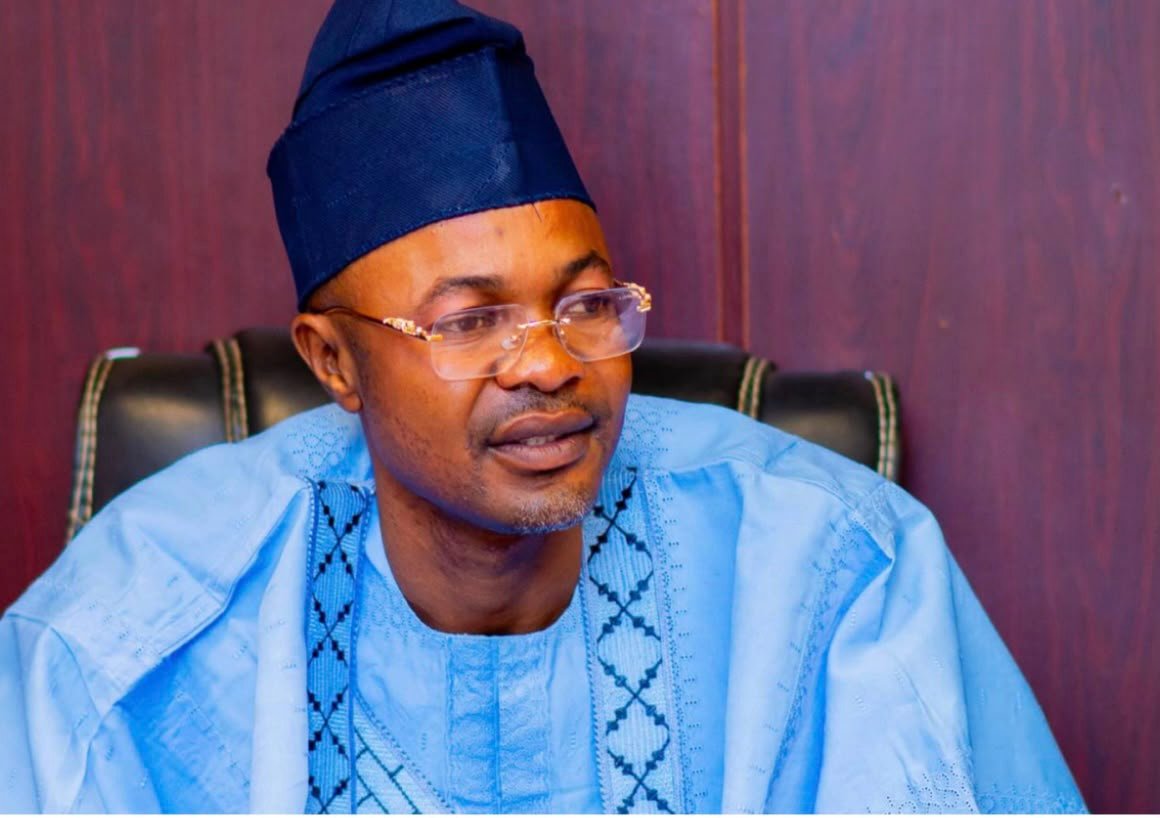
Adeniyi Adeyemi has found himself at the centre of one of the most unusual controversies to emerge from the presidency in recent years.
For months, Adeyemi operated as the director-general of the Presidential Foreign Intervention Promotion Council (PFIPC) — an organisation the presidency now says never existed.
Adeyemi has also frequently been photographed alongside prominent figures in Nigeria’s political and public life.Recent images circulating online show him with Ola Olukoyede, chairman of the Economic and Financial Crimes Commission (EFCC).
Older photographs also show him with former presidents Olusegun Obasanjo and Goodluck Jonathan, among other high-profile personalities.While such appearances do not in themselves establish any official relationship or endorsement, they contributed to the perception that he enjoyed access to influential circles.
The recent controversy escalated after the presidency publicly disowned the council he claimed to be heading, accused Adeyemi of forging official documents and impersonating government officials, and revealed that he is standing trial over multiple criminal charges.
Adeyemi has denied wrongdoing. Instead, he accused senior government officials, including Femi Gbajabiamila, chief of staff to President Bola Tinubu, of demanding bribes and attempting to frustrate his activities after he allegedly refused to comply.
The competing claims have turned the case into one of the country’s most talked-about political and legal controversies.
AN OBSCURE GOVERNMENT AGENCY Before the controversy became public, the PFIPC projected the image of a legitimate federal institution.Its social media platforms described the council as a government body established to promote foreign investment and international partnerships for Nigeria.
The organisation organised investment summits, held meetings with diplomats, traditional rulers and government officials, and used federal symbols and branding in its public communications.
According to the presidency, Adeyemi also operated from an office space within the federal secretariat complex in Abuja and opened multiple bank accounts, including one with the Central Bank of Nigeria (CBN).
The existence of a budgetary allocation linked to the council further fuelled the perception that it enjoyed official recognition.
PRESIDENCY DISOWNS THE COUNCILThe situation changed on June 11, 2026, when Gbajabiamila issued a public disclaimer stating that no organisation known as the Presidential Foreign Intervention Promotion Council existed.
He also said Adeyemi had never been appointed to head any such body and warned diplomatic missions, financial institutions and members of the public against dealing with him or the organisation.
“It has come to the notice of the Federal Government of Nigeria and specifically the Office of the Chief of Staff to His Excellency, President Bola Ahmed Tinubu, GCFR that a certain Prince Adeniyi Adeyemi, under the auspices of an alleged organisation styled as the ‘Presidential Foreign Intervention Promotion Council’ is portraying himself to the general public as having been appointed by my office,” Gbajabiamila said.
“The unsuspecting public is hereby advised to note that such an office does not exist under this administration and no appointment has been made in that regard.
”The disclaimer immediately raised questions about how the council had operated publicly for months while appearing to enjoy access to government facilities.
ADEYEMI’S RESPONSEFollowing the disclaimer, Adeyemi rejected the presidency’s position and made far-reaching allegations against senior government officials.
Among other claims, he alleged that he paid N400 million through intermediaries to secure the appointment, with an outstanding N200 million balance, and that disagreements arose after he refused demands for a percentage of a proposed take-off grant.
Adeyemi argued that the disclaimer had raised questions about official records and government processes that should be independently investigated.
“Let’s assume for one second that all that the chief of staff published was right, that the agency does not exist. Then how did the agency’s name get into the 2026 appropriation budget pages 50 and 51?” he queried.
THE GOVERNMENT’S CASEOn July 1, 2026, Bayo Onanuga, special adviser to the president on information and strategy, released details of the government’s case against Matthew.
According to the presidency, Gbajabiamila petitioned the Department of State Services (DSS) and the Nigeria Police Force in October 2025 after forged appointment letters bearing his signature and official seals surfaced.
The presidency said Adeyemi was arrested on October 27, 2025, and that investigators recovered forged documents during the operation.
The presidency also alleged that he operated 34 bank accounts, including nine opened in the names of fictitious government agencies, and fraudulently created a CBN account.
The government said an eight-count criminal charge was filed against him in November 2025 and that his trial is scheduled to continue at the federal high court on July 27, 2026.
The presidency has also maintained that no public funds were released to the PFIPC.
QUESTIONS THAT REMAIN
Beyond the criminal allegations, the controversy has generated broader questions about government processes and institutional oversight.
Observers have asked how an organisation later declared non-existent was able to operate publicly, use official branding, secure office accommodation and appear to enjoy interactions with government officials and foreign diplomats.
An October 21, 2025 letter from the office of the secretary to the government of the federation reportedly stated that the PFIPC was neither recognised nor authorised by the federal government.
The case has also revived interest in Adeyemi’s previous public activities, including an earlier controversy involving the World Youth Organisation, where similar questions were raised about official recognition and representation.
THE MAN IN THE NEWSWhether the case ultimately becomes one of elaborate impersonation, institutional failure or something more complex will be determined by the courts.
For now, Adeyemi remains at the centre of a saga that has exposed possible vulnerabilities in official processes and sparked debate about how government authority can be projected, perceived and, allegedly, exploited.
As legal proceedings continue, the PFIPC controversy has ensured that Adeyemi remains firmly in the national spotlight.