Salis Muhammad Moriki(Zannan Kwaru)
The contrast between Unguwar Sarki and Kwaru presents a striking case study in the uneven distribution of public goods and the politics of infrastructural allocation. It is both paradoxical and troubling that a relatively small settlement such as Unguwar Sarki enjoys near-complete road tarring, while a significantly larger and more populous community like Kwaru remains entirely excluded from such basic developmental interventions.
This disparity is not merely a question of infrastructure; it is emblematic of a deeper structural imbalance in political representation and governance priorities.
Over the eight-year administration of Nasir El-Rufai, Kwaru appears to have been systematically overlooked in the allocation of developmental projects.
More concerning is the apparent continuity of this pattern under the current administration of Uba Sani, where, despite the passage of three years in public office, there remains little to no tangible evidence of state-led infrastructural development within Kwaru.
From a political economy perspective, this raises critical questions about the logic guiding resource distribution.
Conventionally, democratic theory presupposes that areas with higher population density and greater electoral contribution should attract proportional or at least visible developmental dividends.
Yet, Kwaru, despite its demographic weight and significant electoral participation, appears to have been relegated to the margins of governance attention.
Unguwar Sarki, by contrast, offers a visual representation of state presence.
Its well-tarred roads and modern infrastructural outlook create the impression of a prioritized administrative hub, even though, by demographic and electoral metrics, it does not command the same significance as Kwaru.
This inversion of developmental logic suggests that factors beyond population size and voting strength, such as political patronage networks, elite influence, and proximity to power may be determining the geography of development.
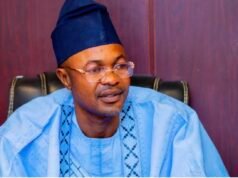
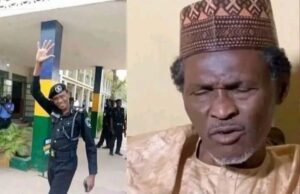
The roles of key public officials, including Commissioner, Ministry for local.government Sadeeq Mamman Lagos and Chairman of Kaduna North Local Government Muhammad Gambo Zion, come into sharp focus within this context.
Their stewardship raises legitimate concerns about equity, inclusiveness, and accountability in local governance.
The perception whether accurate or not, that Kwaru has been rendered politically insignificant reflects a broader crisis of representation, where communities feel alienated from the very institutions meant to serve them.
Equally troubling is the silence or complicity of local political actors who claim proximity to power. Representation, in its truest sense, is not merely symbolic; it is performative and outcome-driven.
The inability or unwillingness of these actors to secure even minimal infrastructural projects for their constituency calls into question their effectiveness and commitment.
Ultimately, the situation in Kwaru compels a fundamental inquiry: what criteria determine who benefits from governance? If electoral contribution, population size, and historical loyalty are insufficient to guarantee inclusion, then the principles underpinning democratic governance are brought into question.
The continued neglect of Kwaru risks entrenching feelings of political alienation, undermining trust in public institutions, and weakening the social contract between the state and its citizens.
Until deliberate and corrective measures are taken, the case of Kwaru will remain a poignant illustration of how development, rather than being a universal right, can become a selective privilege shaped by power, access, and political calculation.